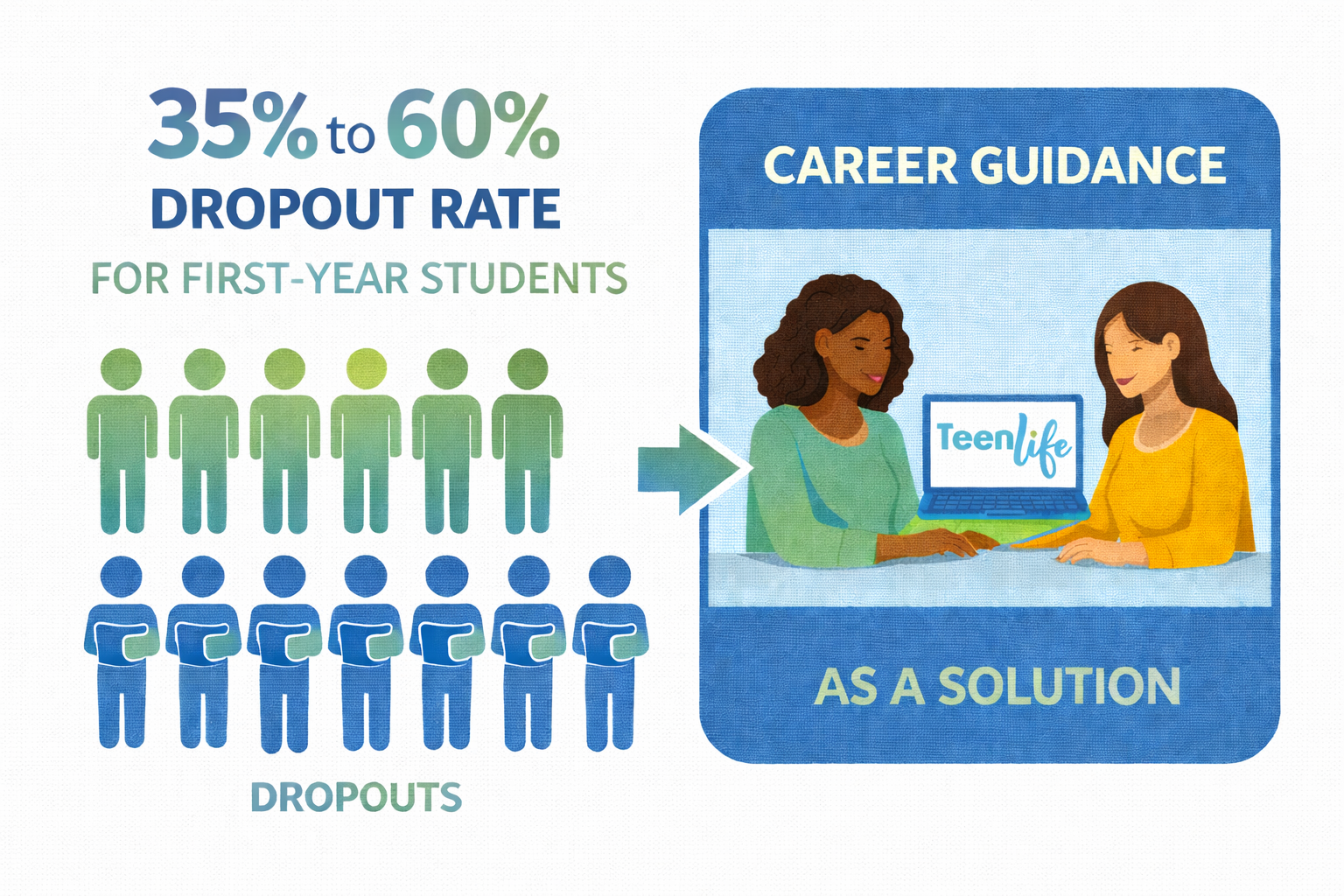

Recent reports highlight a concerning trend in South Africa’s higher education system. In November 2025, Gauteng Education MEC Matome Chiloane indicated that approximately 35% of first-year university students drop out
(https://www.timeslive.co.za/news/south-africa/2025-11-26-first-year-student-dropout-rate-is-35-says-gauteng-education-mec).
Other sources, such as FutureSA (https://www.futuresa.co.za/education/higher-education/south-africa-first-year-dropout-crisis) (September 2025), suggest that this figure can be as high as 60%.
In a recent discussion with a student advisor at a leading public university, I was told that many programmes are at full capacity. This means that when students realise they have chosen the wrong field of study, they are often unable to transfer internally and are forced to drop out and reapply elsewhere. While there are many contributing factors to these statistics, I would like to focus on the areas I am most passionate about—subject and career choices.
It Starts Earlier Than You Think
A common thread in these discussions is that the problem often begins with poor subject choices in Grade 9.
Many learners:
Choose “easier” subjects to achieve higher marks
Follow their friends’ subject choices
Receive guidance that is either too directive or not personalised
(Even when parents seek professional support, I have a recurring concern: Some practitioners tell students exactly what subjects to take or what career to pursue, instead of guiding them to make informed, personalised decisions that they have confidence in)
The Role of Guidance vs. Decision-Making
As professionals—whether psychologists, psychometrists, counsellors, or career practitioners—our role is to guide, not decide.
A career choice is a long-term decision.
The reality is:
The practitioner will eventually step away, but the student must live with the decision. While parents, teachers, and professionals play a critical support role, the final decision must belong to the student.
Some argue that Grade 9 learners are too young to make such decisions. However,
Decision-making is a skill that develops through practice. Avoiding responsibility delays maturity and accountability. Guided decision-making builds confidence and ownership
Subject Choices Are Not Career Choices
One of the biggest misconceptions is that subject choices determine a career.
In reality,
Subjects open doors to fields of study. A field of study provides access to multiple career pathways. For example,
Learners interested in engineering or medical sciences need Mathematics and Physical Science. Learners interested in commerce-related fields typically require Mathematics and subjects such as Business Studies. Once subjects are aligned to a broad field, learners can begin exploring specific career options within that field.
Do Your Research Early
Each university has its own admission requirements. It is important to:
- Review requirements across multiple institutions, ensure subjects align with intended fields of study
- Keep options open where possible, and consider job shadowing.
- Should a learner already have a clear goal (e.g., becoming a doctor or architect), subject choices must support that pathway from the start.
University Is Not the Only Path
There is a strong societal expectation that every learner should go to university—but this is not always the best fit.
Through my work with the 4/4/1 Learning Style Questionnaire (based on Kolb’s Learning Theory), I have seen that:
Some learners are naturally more practical and hands-on
Traditional university environments are often theory-driven
For these learners, alternative pathways may be more suitable:
Institutions with a practical curriculum
Vocational or skills-based training
Work-integrated learning environments
In many industries, practical competence can be as valuable—if not more valuable—than a purely academic qualification.
Practical Advice for Parents and Learners
Final Thought
Career decisions are not a once-off event—they are part of an ongoing journey.
With the right guidance, self-awareness, and informed decision-making, learners can:
- Choose subjects with confidence,
- Explore meaningful study paths
- Build careers aligned to who they truly are,
Avoid becoming part of the statistics—start the journey with intention.
I recently had the privilege of serving on a panel where we shared guidance to parents in supporting their children’s career journeys.
https://youtu.be/8SNCkWfmCs4?si=s7AuGsbUNVUKXmki
TeenLife provides a structured, practical approach to help teenagers understand themselves and make informed decisions about their future. www.teenlife.co.za